


The Skin–Body Connection in Summer: Why Beauty Starts from Within
April 21, 2026
Introduction – Summer Glow… or Summer Stress?
Summer is often associated with radiance, glowing skin, sun-kissed complexions, and vibrant energy. Longer days, outdoor activities, and brighter light naturally enhance our perception of vitality and beauty.
Yet biologically, summer is also a season of intense stress for the body.
Ultraviolet (UV) radiation from the sun, heat, salt from seawater, perspiration, pollution, increased physical activity, and even seasonal changes in diet all place stress on the body. The skin, far from being an isolated organ, constantly reflects these pressures.
So why do some people maintain effortless radiance while others show fatigue, sensitivity, or dullness — even with careful skincare? One of the answer lies in the skin–body connection, and in the way our organism adapts to seasonal stressors.

The Skin Is Not Isolated: It Reflects Internal Balance
The skin is more than a protective barrier — it is a dynamic organ intimately connected to the immune system, hormonal pathways, energy metabolism, and the gut–skin axis. These links mean that the skin continuously mirrors the body’s internal state, revealing both vitality and stress levels.
When internal balance is challenged, it becomes visible on the skin:
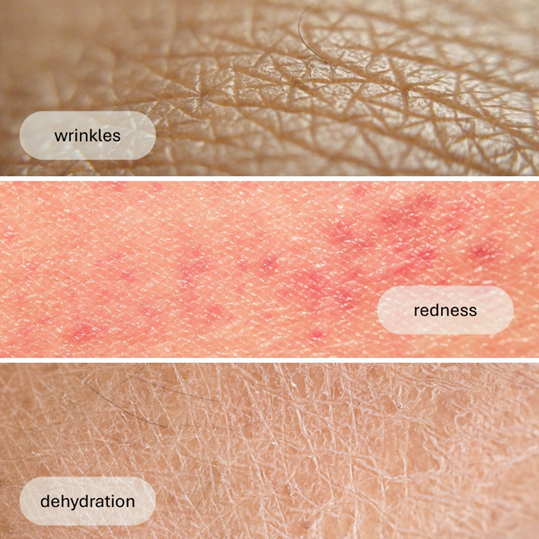
- Oxidative stress accelerates skin aging. Free radicals degrade collagen and elastin, weaken membranes, and contribute to fine lines, uneven pigmentation, and loss of firmness1,2.
- Systemic inflammation increases skin sensitivity. Fragile barriers and heightened reactivity can lead to redness, irritation, or reduced tolerance to heat, UV, and pollution3,4.
- Nutritional imbalances diminish radiance. Deficiencies in micronutrients, essential fatty acids, or protective bioactives can compromise hydration, skin tone, and overall luminosity5.
Supporting long-term skin health therefore requires addressing the internal mechanisms that sustain overall balance, rather than relying solely on topical care.
What Happens Inside the Body in Summer?
Summer amplifies the body’s physiological demands. UV exposure, heat, dehydration, and increased physical activity all require heightened adaptive capacity.
UV Exposure and Systemic Oxidative Load
Sunlight increases the body’s overall oxidative load. Beyond the tan, UV exposure triggers cellular defense and repair pathways, demanding energy, antioxidants, and micronutrients. Summer becomes a period of intensified cellular vigilance, where the efficiency of internal resilience determines how well the body copes with environmental stress.
Heat and Hydration Challenges
High temperatures force the body to work harder to maintain core temperature. Sweating leads to fluid and mineral loss, and even mild dehydration can impair enzymatic activity, cellular efficiency, and barrier function. For the skin, this translates to dryness, roughness, and increased vulnerability to environmental stress.
Increased Activity and Metabolic Demand
Longer days often mean more outdoor activity. While beneficial for health, higher energy expenditure increases the need for nutrients to support tissue repair, energy metabolism, and cellular recovery. Without sufficient support, the body’s regenerative capacity can be outpaced, and skin may visibly reflect this strain.
Taken together, summer is a season of heightened adaptation. When nutrition, hydration, and recovery are optimized, the skin can preserve firmness, radiance, and resilience — a visible reflection of internal balance in action.

Supporting Skin Resilience: Nutrition and Topical Protection
Because the skin reflects internal health, maintaining its resilience requires a holistic strategy that combines internal support with targeted external care. Nutrition plays a key role: antioxidants help neutralize free radicals generated by UV exposure and metabolic activity, essential fatty acids maintain cellular integrity, and bioactive compounds enhance the body’s adaptive and metabolic mechanisms, ensuring cells are better equipped to respond to seasonal stressors.
Topical care works in synergy with internal support by reinforcing the skin barrier, preserving hydration, and aiding recovery after sun and heat exposure. Together, these approaches form a comprehensive system of skin resilience, helping the skin stay radiant, hydrated, and strong throughout summer.
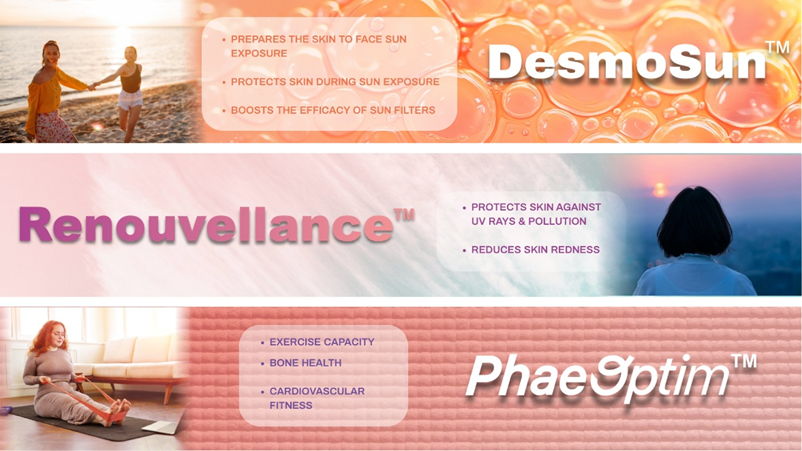
Microphyt’s innovations illustrate this synergy in practice. DesmoSun complements this internal support by protecting the skin externally, reinforcing the barrier and aiding recovery from UV stress and environmental aggressors.
Renouvellance, designed to help defend the skin against pollution-induced stress, addresses another key summer challenge: increased environmental pollution during heatwaves, which further amplify oxidative burden and accelerate visible skin fatigue.
PhaeOptim, strengthens the body’s internal adaptive mechanisms, supports antioxidant defenses, and optimizes metabolic.
This integrated approach goes beyond cosmetic care. It promotes overall well-being, vitality, and physiological resilience, showing that summer beauty is inseparable from a body that is fully supported from the inside out.
Conclusion – Summer Beauty Is a Matter of Balance
Summer is a season of biological adaptation as much as it is of aesthetic appeal. The body continuously responds to UV radiation, heat, dehydration, and increased activity. True “summer glow” is not created by surface treatments alone — it emerges from internal equilibrium and resilience.
Balanced nutrition, effective adaptive mechanisms, thoughtful topical care, and an active lifestyle work together to reinforce the body’s defenses. When these elements are harmonized, the skin becomes a mirror of overall health: firm, radiant, and resilient.
Understanding and supporting the body’s natural adaptation processes allows for smarter, more holistic approaches to summer wellness. In the end, beauty is not something to manufacture — it is something to reveal, emerging naturally when internal balance and external care operate in harmony.
References
1 Vierkötter, Andrea, and Jean Krutmann. “Environmental influences on skin aging and ethnic-specific manifestations.” Dermato-endocrinology 4.3 (2012): 227-231.
2Papaccio, Federica, Silvia Caputo, and Barbara Bellei. “Focus on the contribution of oxidative stress in skin aging.” Antioxidants 11.6 (2022): 1121.
3Dupont, Eric, Juan Gomez, and Diane Bilodeau. “Beyond UV radiation: a skin under challenge.” International journal of cosmetic science 35.3 (2013): 224-232.
4Panich, Uraiwan, et al. “Ultraviolet radiation‐induced skin aging: the role of DNA damage and oxidative stress in epidermal stem cell damage mediated skin aging.” Stem cells international 2016.1 (2016): 7370642.
5Boelsma, Esther, Henk FJ Hendriks, and Len Roza. “Nutritional skin care: health effects of micronutrients and fatty acids.” The American journal of clinical nutrition 73.5 (2001): 853-864.