



Redefining Longevity: From Passing Time to Lasting Vitality
February 26, 2026
Longevity Today: More Than Just Years
For decades, longevity was measured simply by the number of years added to life. Today, this approach shows its limits. Living longer is only meaningful if those extra years are filled with energy, mental clarity, mobility, and overall well-being. Science now calls this healthspan: the span of life lived in good health.
At the heart of this new vision lies a fundamental truth: longevity is decided at the cellular level. Our cells are the true guardians of time. They produce energy, orchestrate tissue repair, enable organ communication, and allow the body to adapt to its environment. Aging healthily is, above all, about preserving this adaptability.
The Paradox of Modern Aging
We live longer than ever, yet our cells age faster.
The paradox of the modern world is not time—it’s stress.
Mental, emotional, environmental, digital—our daily lives are a constant stream of micro-aggressions triggering repeated biological responses. Stress is not just a feeling; it acts deeply within the body, accelerating chronic inflammation, oxidative stress, mitochondrial decline, and the loss of cellular communication.
Gradually, these imbalances weaken the body’s major functions—cognition, digestion, mobility, as well as skin structure and quality—accelerating the processes of aging1.

Cellular Health: The Foundation of Longevity
Aging is not a sudden event but a slow, silent process. At a microscopic level, our cells gradually lose their ability to function optimally. Oxidation, chronic inflammation, metabolic dysregulation, and altered intercellular signaling—these invisible processes shape our biological age, often more telling than chronological age2.
Supporting longevity, therefore, is not about “stopping” aging but slowing the processes that erode cellular resilience while strengthening the body’s natural repair and adaptation mechanisms.
Microalgae: Longevity Champions for 3.5 Billion Years
Long before humans appeared, nature had already discovered the key to longevity.
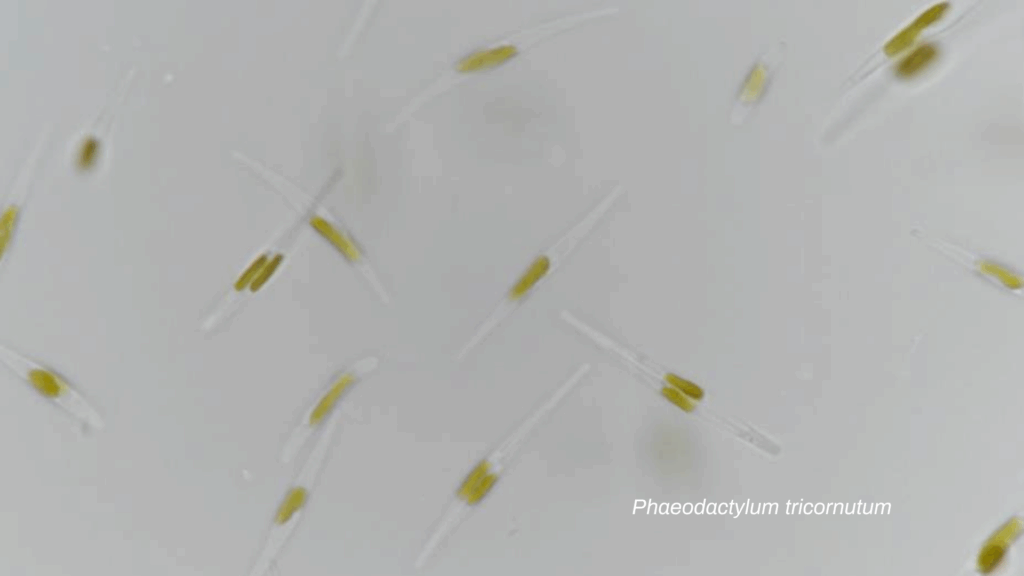
Over 3.5 billion years ago, in a hostile Earth, the first microalgae emerged in the oceans. They invented photosynthesis, produced the oxygen we breathe, and survived every major crisis in the history of life.
Even today, they thrive in extreme environments: polar ice, deserts, saline waters, and high-radiation zones. Their secret is not brute resistance—it’s adaptation3.
To survive, microalgae modify their metabolism and naturally produce a vast array of bioactive molecules—antioxidants, carotenoids, polyphenols, fatty acids, and polysaccharides—that protect them from oxidative stress, and environmental assaults.
They embody a fundamental truth: longevity is not about duration, but resilience that is inherited and renewed.
From Nature’s Wisdom to Human Longevity
Humans are only beginning to understand what nature has mastered for billions of years. Rather than trying to control every parameter of aging, modern science is turning toward a smarter approach: biomimicry.
At Microphyt, this “intelligence of life” is at the core of research. For over ten years, teams have studied the extraordinary adaptability of microalgae, translating their survival strategies into practical solutions for human health and beauty.
The goal is not to fight time, but to support the biological mechanisms that keep the body adaptable, balanced, and functional throughout life.
Supporting Longevity at Every Stage of Life: Targeting the Hallmarks of Aging
Longevity is ultimately rooted in the biology of our cells. Over time, a series of interconnected processes gradually erode cellular function, tissue integrity, and systemic resilience. Scientists have grouped these processes under the concept of the Hallmarks of Aging, a framework that maps the key mechanisms driving the aging process. Mitochondrial decline, oxidative damage, chronic inflammation, cellular senescence, and disrupted communication between cells form the biological foundation of aging. These hallmarks explain why tissues weaken, organs lose efficiency, and systems gradually lose adaptability4. By identifying these mechanisms, we gain insight into strategic points of intervention, and Microphyt’s microalgae-based ingredients act precisely here — reinforcing cellular defenses, maintaining homeostasis, and supporting adaptability and resilience across the body.
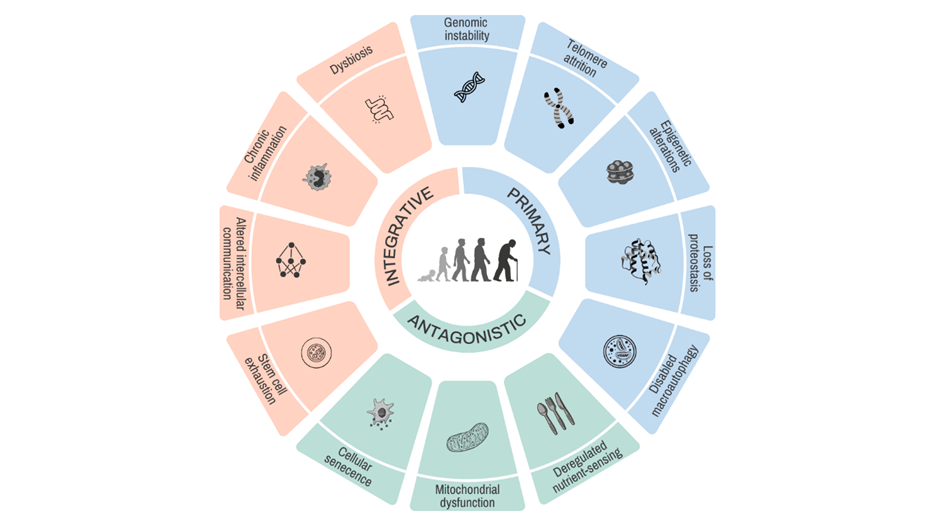
An Integrated Approach to Longevity: Nutraceuticals and Cosmetics Microphyt’s microalgae-based ingredients support resilience and vitality at every stage of life, targeting key hallmarks of aging through a multi-system approach.
- Cognitive Longevity – Preserving the Mind Over Time
Maintaining cognitive function is essential for clarity, adaptability, and quality of life. As we age, neurons face oxidative stress, inflammation, and reduced communication, which can compromise memory, attention, and executive function.
BrainPhyt™ is a fucoxanthin-rich microalgae extract protecting neurons from oxidative and inflammatory stress. Clinically, BrainPhyt improves memory, attention, and executive function while reducing markers such as IL-6, and TNF-alpha, supporting long-term cognitive health, mental clarity, and resilience to modern stress5,6. - Gut Longevity – The Foundation of Systemic Health
The gut is the body’s silent guardian, central to metabolism, immunity, and systemic balance. Microbial imbalances, intestinal permeability, and chronic inflammation can disrupt the gut-brain-body communication, accelerating aging and affecting overall well-being.
ZenGut™ is the first commercial extract of Tetradesmus obliquus, restoring microbiota balance, supporting digestive comfort, while enhancing mental resilience, and emotional well-being, reinforcing the gut as a critical pillar of longevity7. - Physical Longevity – Energy That Lasts
Mobility, strength, and endurance are essential for independence and daily function. Declining mitochondrial function, oxidative damage, and reduced muscle capacity limit energy and increase frailty, creating a cascade of functional decline.
PhaeOptim™ is an extract derived from Phaeodactylum tricornutum, enhancing cardiovascular efficiency, bone health, and exercise capacity, helping maintain vitality and mobility throughout life8. - Skin Longevity – Visible Proof of Cellular Vitality
The skin is the body’s largest organ and the first to reflect cellular aging. Reduced communication between layers, oxidative stress, inflammation, and glycation lead to wrinkles, loss of firmness, and diminished resilience.
PhycoAge™ is a rich in fucoxanthin and EPA, helping skin combat oxidative stress, inflammation, and glycation. It stimulates natural hyaluronic acid production, smooths wrinkles, improves firmness, and strengthens the skin’s ability to adapt to time, supporting visible, lasting beauty9.

Together, these ingredients provide a holistic, multi-target approach to longevity, acting across multiple cellular pathways to maintain vitality, resilience, and healthspan—from brain to gut, body, and skin.
Conclusion – Aging Differently
Modern longevity is not a battle against time. It is a journey of supporting life itself—a way to provide every cell, from brain to skin, with the resources it needs to adapt, repair, and endure.
By drawing inspiration from the planet’s oldest and most resilient organisms, Microphyt paves the way for a more balanced, holistic, and human approach to longevity.
Ultimately, aging well means continuing to live fully, at every stage of life.
References:
- Harvanek, Zachary M., et al. “Psychological and biological resilience modulates the effects of stress on epigenetic aging.” Translational Psychiatry 11.1 (2021): 601
- Chen, Jian-Hua, C. Nicholes Hales, and Susan E. Ozanne. “DNA damage, cellular senescence and organismal ageing: causal or correlative?.” Nucleic acids research 35.22 (2007): 7417-7428
- Elsevier. “Photosynthesis originated a billion years earlier than we thought, study shows.” ScienceDaily. ScienceDaily, 6 March 2018
- Tenchov, Rumiana, et al. “Aging hallmarks and progression and age-related diseases: a landscape view of research advancement.” ACS Chemical Neuroscience 15.1 (2023): 1-30
- Yoo, Choongsung, et al. “Effects of supplementation with a microalgae extract from phaeodactylum tricornutum containing fucoxanthin on cognition and markers of health in older individuals with perceptions of cognitive decline.” Nutrients 16.17 (2024): 2999
- Goodbody, Emily, et al. “Promising benefits of six-month Phaeodactylum tricornutum microalgae supplementation on cognitive function and inflammation in healthy older adults with age-associated memory impairment.” Frontiers in Aging 6 (2025): 1540115
- Maltz, Sydnie, et al. “Effects of Supplementation with Microalgae Extract from Tetradesmus obliquus Strain Mi175.B1. a on Gastrointestinal Symptoms and Mental Health in Healthy Adults: A Pilot Randomized, Double-Blind, PlaceboControlled, Parallel-Arm Trial.” Nutrients 17.6 (2025): 960
- Dickerson, Broderick, et al. “Effects of supplementation with microalgae extract from Phaeodactylum tricornutum (Mi136) to support benefits from a weight management intervention in overweight women.” Nutrients 16.7 (2024): 990