


Microalgae: Origin, Functioning and Their Essential Role in Life on Earth
January 16, 2026
Microalgae are all around us, yet they remain largely unknown. Invisible to the naked eye, present in oceans, lakes and even in deserts or polar ice, these tiny organisms play a fundamental role for our planet.
Often dismissed as simple aquatic lifeforms, microalgae are actually among the oldest, most diverse, and most efficient biological groups on Earth. Their ability to capture light, adapt to extreme environments, and produce an astonishing variety of molecules has made them a major focus of research in science, health, nutrition, cosmetics, and environmental sustainability since the last decades.
But what exactly are microalgae? Where do they come from, how do they function, and why have they become indispensable to the balance of life on Earth? To answer these questions, we need to go back to the very origins of life.
AT THE ORIGINS OF LIFE: WHEN MICROALGAE APPEARED ON EARTH
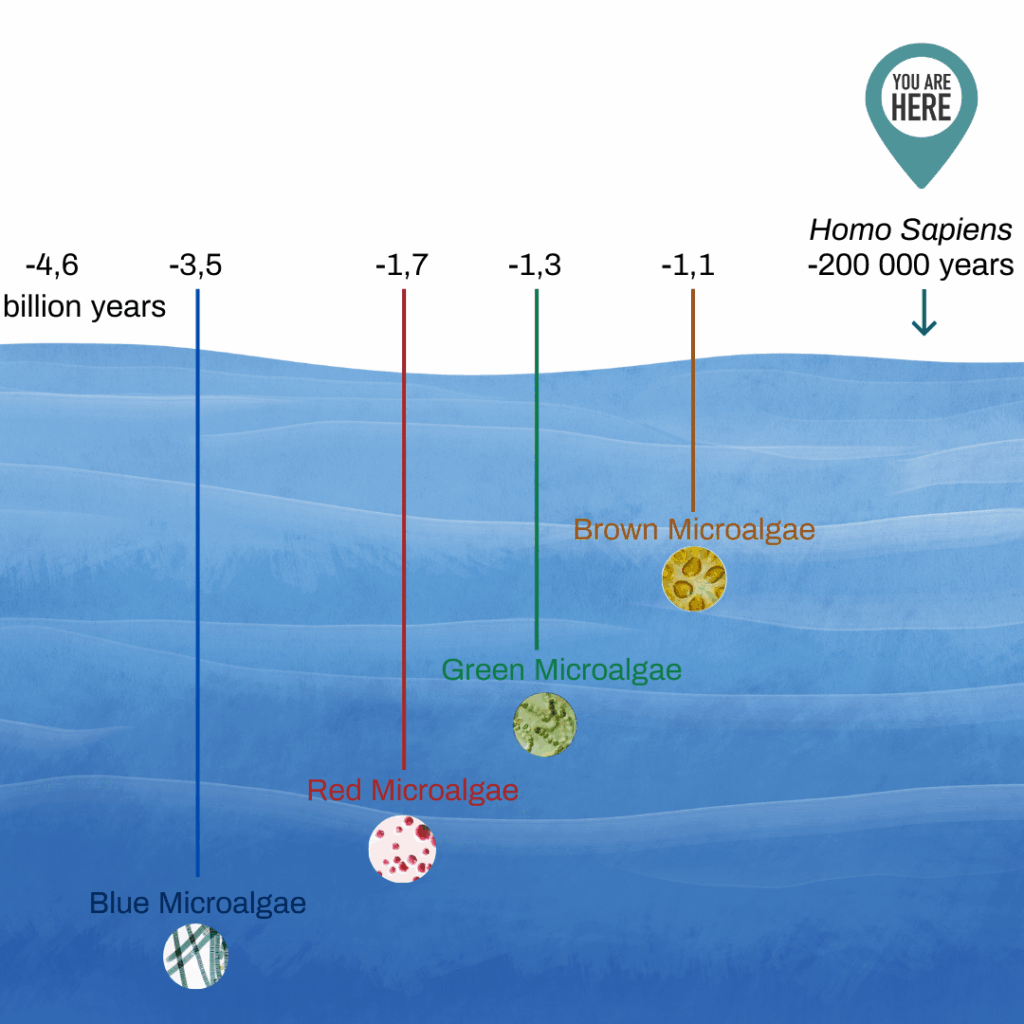
Around 3.5 billion years ago, Earth was a hostile planet, devoid of oxygen, shaped by intense volcanic activity and exposed to extreme solar radiation. It was in this harsh environment that the first microalgae emerged in the primordial oceans.
Their emergence marked a pivotal moment in the history of life: by capturing light energy to produce organic matter, these tiny organisms gradually enriched the atmosphere with oxygen. This process, known as the Great Oxygenation Event, transformed the chemistry of oceans and air, paving the way for multicellular life and the biodiversity we know today. Microalgae are therefore not just witnesses of life’s history—they are its biological foundation. Without them, there would be no oxygen, no structured ecosystems, and no life as we know it.
WHAT ARE MICROALGAE, EXACTLY?
Microalgae are microscopic, single-celled organisms capable of photosynthesis. Unlike terrestrial plants, they lack complex structures such as roots, stems, or leaves, and primarily thrive in aquatic or moist environments.
To better understand them, it is important to distinguish:
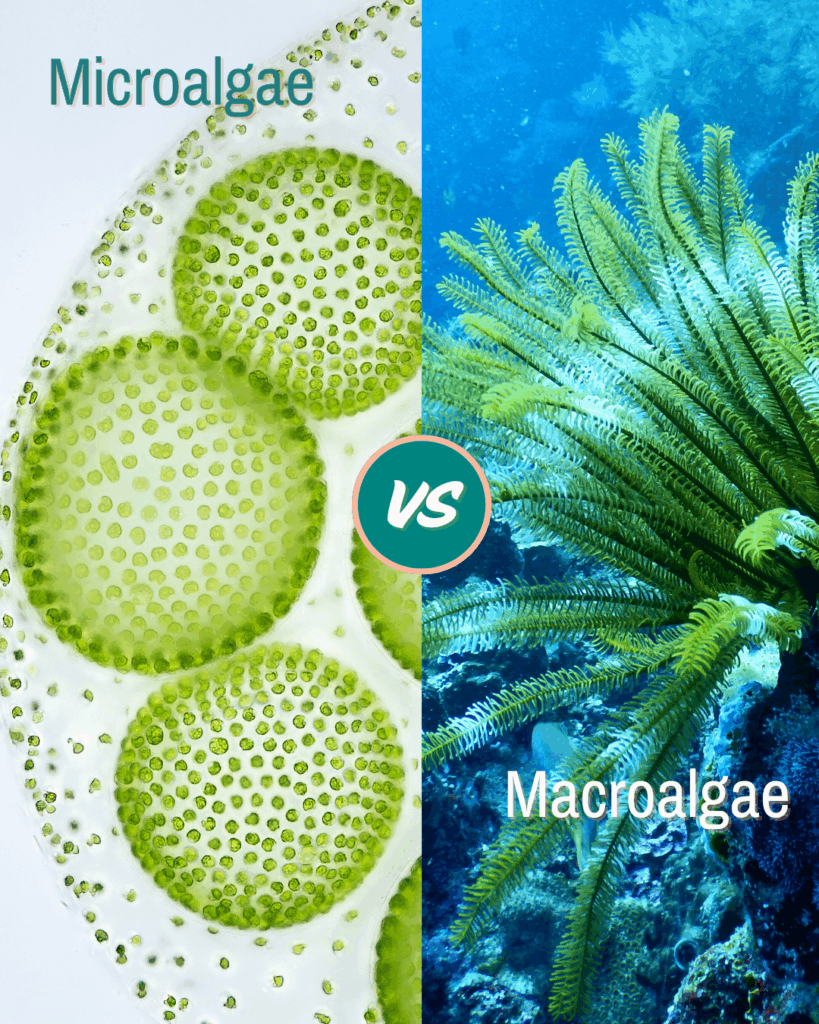
- Microalgae vs macroalgae: Macroalgae, such as seaweeds visible to the naked eye, are multicellular, whereas microalgae are microscopic unicellular organisms.
- Microalgae vs plants: Terrestrial plants evolved from certain lineages of green microalgae. Microalgae are the plant ancestors. They have retained a simpler cellular structure and remarkable metabolic flexibility.
- Microalgae and phytoplankton: Microalgae constitute a major component of phytoplankton, the biological engine of aquatic ecosystems.
THE MAIN MICROALGAE FAMILIES AND THEIR COLORS
Microalgae are categorized by their pigments, which define their color, light-absorption capacity, and environmental adaptations. Estimates suggest there are between 200,000 and one million species, reflecting their vast diversity and biological potential.
Blue microalgae are among the oldest, emerging over three billion years ago, and are credited with initiating the oxygenation of the planet. They produce phycocyanin, a blue pigment with antioxidant and photoprotective properties, and thrive in high-light environments, playing a central role in photosynthetic efficiency.
Red microalgae, rich in phycoerythrin, capture light wavelengths at depth, enabling them to thrive where light is limited.
Green microalgae, close to the ancestors of terrestrial plants, contain mainly chlorophyll and appeared later in evolution.
Brown and golden microalgae are abundant in oceans and play a major role in marine primary productivity, forming the foundation of oceanic food webs and contributing to carbon capture through highly efficient pigments such as fucoxanthin.
This diversity explains why the term “microalgae” encompasses thousands of species, each with unique biological and functional properties.
HOW DO MICROALGAE WORK?
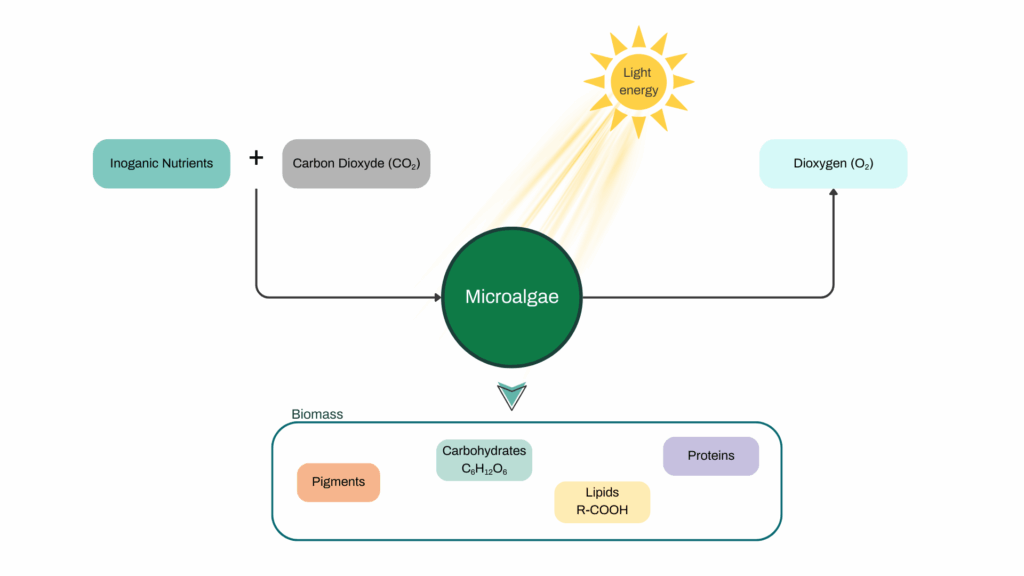
Microalgae rely primarily on photosynthesis, using light, carbon dioxide, and water to produce energy while releasing oxygen.
Yet their metabolism goes far beyond this essential function. Microalgae synthesize a broad range of bioactive molecules, including protective pigments, high-quality proteins, specialized lipids, functional polysaccharides, and adaptive antioxidants.
This molecular richness is directly linked to their environment: to survive extreme conditions—intense light, oxidative stress, salinity, or temperature fluctuations—microalgae have developed unique biochemical strategies, making them incredibly resilient and versatile. It is precisely this adaptability that has allowed microalgae to persist on Earth for more than 3.5 billion years, thriving through dramatic changes in climate and the planet’s chemistry.
WHERE ARE MICROALGAE FOUND TODAY?
Microalgae are everywhere—even in the most familiar places. A simple puddle, a garden pond can contain thousands of microalgal cells, invisible to the naked eye but teeming with life.
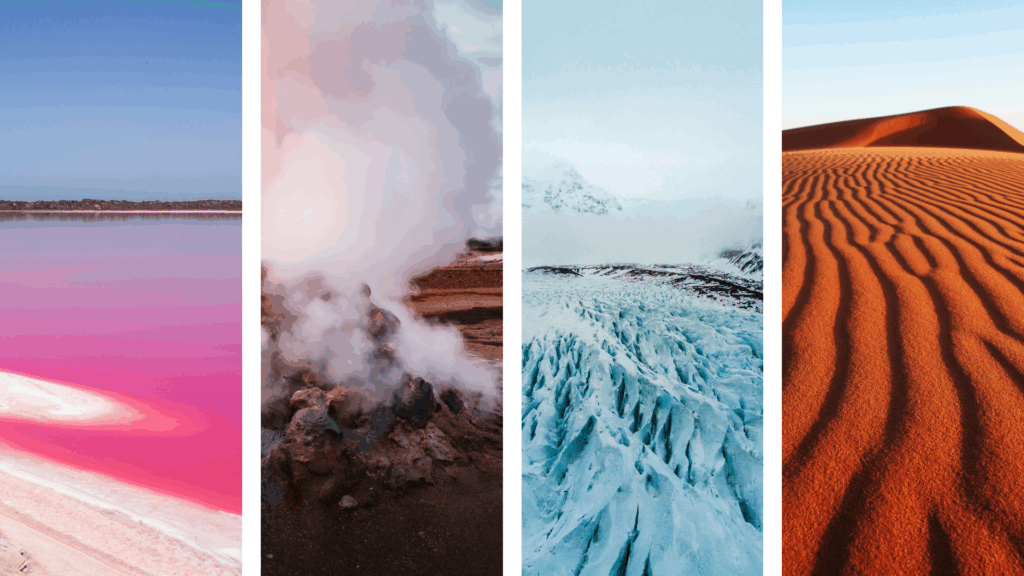
Some microalgae are so prolific that they can dramatically transform their environment. For example, the pink hue of certain lakes, like Lagoon Hutt in Australia or the salt marshes in Camargue (France), is caused by the microalgae Dunaliella salina, which produces pigments to protect itself from intense sunlight and high salinity. These vivid displays offer a tangible glimpse of the power and adaptability of microalgae.
Beyond these familiar and visually striking environments, microalgae also thrive in extreme habitats, from arid deserts and acidic soils to volcanic terrains, hot springs, fumaroles, and even polar ice. Their resilience relies on metabolic plasticity, adjusting pigment production, lipid synthesis, and protective compounds to survive throught, intense UV radiation, temperature fluctuations, and salinity. This remarkable adaptability makes microalgae an exceptional resource for research, innovation, and the production of unique bioactive molecules found nowhere else in nature.
WHY MICROALGAE ARE ESSENTIAL TO THE PLANET’S BALANCE
Microalgae play a central role in Earth’s biological and climatic balance. They produce 40% of the oxygen we breathe every day, absorb carbon dioxide, and form the base of aquatic food chains, supporting countless species of fish, birds, and other wildlife. Their ability to thrive in extreme environments—from deserts and volcanic soils to polar ice—illustrates their remarkable resilience and adaptability, which is essential to maintaining the stability of terrestrial and marine ecosystems.
Some of these ecological interactions are visible and fascinating. For example, the pink color of flamingos comes not from the shrimp they eat, but from the microalgae those shrimps have accumulated. It illustrates how microalgae form the base of aquatic food chains. Tiny bioactive molecules and nutrients, such as omega-3 fatty acids, carotenoids, and antioxidants, are first produced by microalgae, then transferred to zooplankton and small fish, and finally to larger fish that humans consume. In this way, microalgae contribute indirectly to the nutrients found in seafood, linking these microscopic organisms to human health and nutrition.
Beyond their environmental impact, microalgae are also natural sources of bioactive molecules with applications in nutrition, health, and cosmetics. Their diversity and efficiency make them ideal for creating sustainable ingredients. At Microphyt, we translate this adaptive intelligence into cutting-edge ingredients, transforming the resilience and biological strategies of microalgae into solutions that support human well-being. Our formulations target the same mechanisms that have allowed microalgae to thrive for billions of years, helping the body adapt, recover, and maintain vitality.
This approach enables the development of innovative nutraceutical and cosmetic products, bridging the ecological and health benefits of microalgae into practical, responsible, and effective solutions for everyday life.
Ancient yet innovative, microalgae embody a unique connection between the history of life on Earth and the solutions of tomorrow. By studying, cultivating, and responsibly valorizing them, we unlock one of the most promising keys to addressing the challenges of the future.